
Why choose Bowen?
The Bowen Technique is suitable for all ages and stages – from birth through to end-of-life care.
People who look to Bowen Therapy don’t fall into one particular category. They might have problems related to structure, for example problems with muscles or joints. Some clients might be looking for support with symptoms related to their digestion or breathing while others might be looking for support with emotional issues such as anxiety or with sleep difficulties.
There are very few reasons not to use the Bowen Technique and these mostly relate to specific areas combined with specific conditions rather than an overall contra-indication.
In today’s busy world, it’s all too easy to just brush over small niggles in the hope that they will improve over time. Those small niggles have the habit of building up until eventually they become a much bigger problem, preventing us from doing the things we love or need to do.
What is Bowen Therapy?
The Bowen Technique was developed in Australia in the mid 1900s by Tom Bowen, a man with no formal training in anatomy and physiology or bodywork of any sort. However, what he did appear to have was a real interest in understanding the human body and how it works and a desire to help those whose bodies weren’t functioning at their best.
Tom Bowen never wrote down what he actually did but instead allowed a small number of people to regularly watch and learn from him. Each of these people interpreted what they saw, given their own professional training, and developed what they saw, given their own understanding.
Research into how exactly the Bowen Technique works is still continuing but in the meantime, the essence of the technique Tom Bowen developed continues to be taught and practiced world-wide.
How does Bowen Therapy work?
As previously mentioned, research into how Bowen actually works is ongoing. One idea is that it is connected to the tension held in the body. ‘Tensegrity’ might be a new word to you but it’s a combination of the words ‘tension’ and ‘integrity’. Although it’s a word usually used to describe structure in architecture, it does a good job in illustrating how the body maintains the wholeness, if you like, of its structure through the tension between the different elements contained within it.
In the case of the body, this is the tension between the fascia (the web-like structure which covers everything inside our bodies) and our other internal structures like organs, muscles and bones, enabling them to stay in place. When a Bowen move is made, it gives the brain and the body a signal about that tension and lets it reset the tension where it’s needed.
What can I expect?
On arrival you will be shown to the therapy room upstairs. I will explain how any information relating to you will be kept safely and then you will be asked for some details about yourself and your medical history before carrying out some assessments.
You can wear light, loose clothing or your underwear. In either case, you will be kept comfortable and covered by a blanket if you wish.
What happens during the session?
You will usually lie on the therapy couch and I will begin the treatment. However, if lying down is a problem for you, most aspects of the therapy can be adapted.
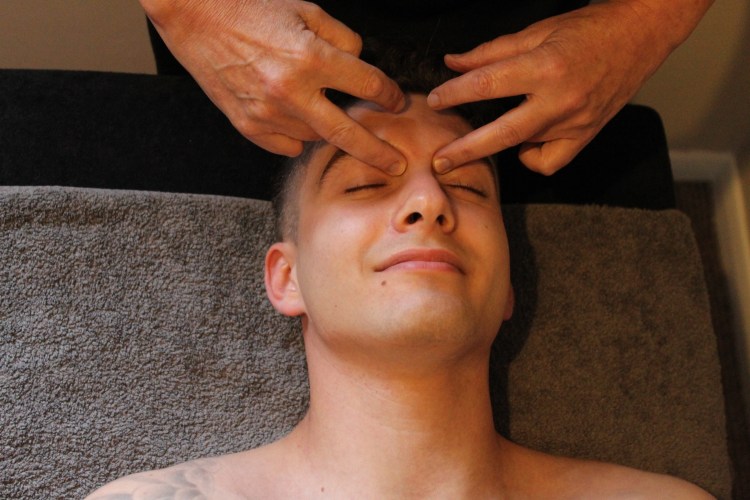
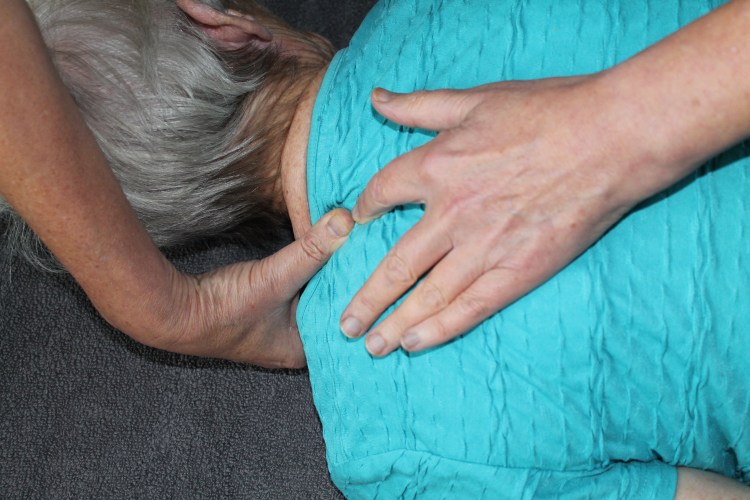
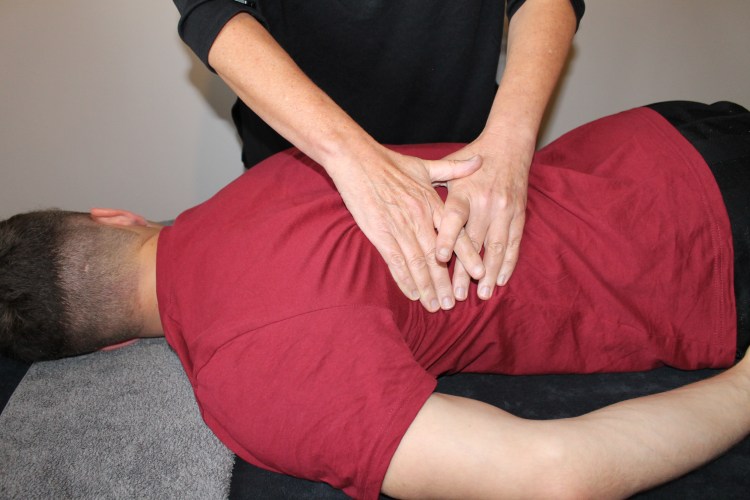
Having a Bowen Therapy session is very different to having other types of bodywork; there’s no massage or bone manipulation involved. Instead, I will use my thumbs and forefingers on precise points on your body to make rolling moves over the soft tissues.
After a number of Bowen moves, I will leave the room and take a short break to allow your body time to respond. I will return and repeat the process of moves followed by a break. I may ask you to get up and take a short walk before returning to the therapy couch to reassess your body.
What happens next?
You will be asked to sit up and take a drink of water. I will explain how important it is to drink water regularly following your visit and also to make sure that you move around at least every 30-60 minutes during waking hours. This may be the end of your session or there might be some more work to do while you are seated.
Once the session is over, you will be invited to book your second visit in a week’s time with a third session at a later date. Most clients should see some change in this time, although long-standing issues may take longer to respond.
What might happen after the therapy?
Everyone responds to Bowen differently. Some clients feel energised or relaxed while others might experience some fatigue, stiffness or a headache or even an increase in their original symptoms for a short while. If you have any particular questions, please don’t hesitate to get in touch.
Bowen can work well alongside conventional medicine but please don’t have any other bodywork or energy therapies for seven days either side of your treatment. This is just to give the body a chance to respond to the technique and also so that you know what is working for your particular issues.
Here’s what my clients are saying …
“I have had minor aches and pains in my neck and shoulders and with just one treatment they have completely disappeared. From being sceptical at first I would highly recommend this treatment.”
AR
“I’ve just finished a course of three sessions with Rosie as I was really struggling with glute pain and thought I’d try something different. I can honestly say that the acute pain has gone. I can really recommend that you give Bowen a try and Rosie is excellent!”
JL
“I carry tension in my neck and shoulders. I was genuinely amazed at the almost instant feeling of relief! I sat up and it felt like a literal weight had been lifted from my head. Rosie is approachable, puts you at your ease and knows her stuff.”
DS
Remember that complementary therapies such as the Bowen Technique, Reiki or McLoughlin Scar Tissue Release are not a substitute for medical advice or treatment and if you’re at all in doubt about your condition then you should seek advice from your GP.

 Rosie Roome Bowen